Four-man Space X Crew Dragon spacecraft wraps up six-month stay in orbit_我的网站
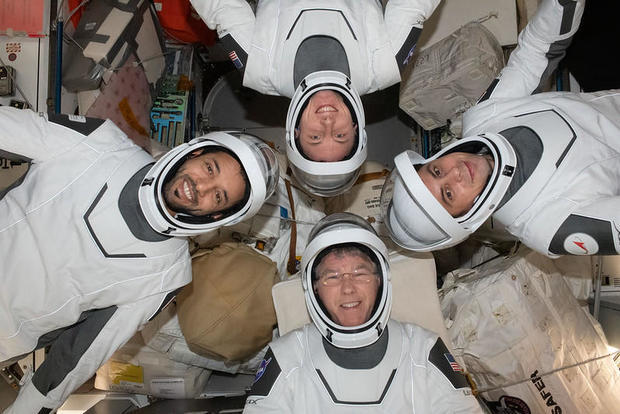
一 | Two NASA astronauts, a Russian cosmonaut and a United Arab Emirates astronaut undocked from the International Space Station Sunday and headed for an overnight splashdown off Florida's East Coast early Monday to wrap up a six-month stay in orbit.Strapped into their SpaceX Crew Dragon "Endeavour" spacecraft, Crew-6 commander Stephen Bowen, pilot Woody Hoburg, cosmonaut Andrey Fedyaev and UAE crewmate Sultan Alneyadi undocked from the station's forward Harmony module at 7:05 a.m. ET to kick off a 17-hour flight back to Earth.Crew-6 (clockwise from top): Pilot Woody Hoburg, cosmonaut Andrey Fedyaev, commander Stephen Bowen and United Arab Emirates astronaut Sultan Alneyadi. NASA "Before we get busy, we just want to say wow!" mission control radioed a few minutes before undocking. "Can you believe it's already time to leave? We can't. ... You've done an incredible job, and to say it's been a pleasure to support you guys in this mission would be an understatement." "Thank you very much," Bowen replied. "It's been a real pleasure and an honor to be here for this expedition. We're coming up on 23 years of continuous occupation of the International Space Station, which is absolutely amazing. Just a real privilege to be a part of it."If all goes well, the Crew Dragon will execute a 16-minute de-orbit thruster firing starting at 11:24 p.m. ET. The "burn" will slow the spacecraft by 252 mph, just enough to drop it back into the lower atmosphere on a southwest-to-northeast trajectory.
Splashdown in the Atlantic Ocean east of Jacksonville, Florida, is expected at 12:17 a.m. ET Monday."We're definitely looking forward to our return, and for me as a rookie flyer, the final part of that unique life experience (of) decelerating from 17,500 miles an hour down to hopefully a great splashdown," Hoburg said last week.A SpaceX team will be standing by to pull the spacecraft aboard a company recovery ship and assist the crew members getting out of the cabin as they begin readjusting to the unfamiliar tug of gravity after a half year in weightlessness.Before departing the space station, Bowen, a former submariner, said he most looked forward to "the nice ocean air and peaceful calm seas. That'll be really nice to get back to."
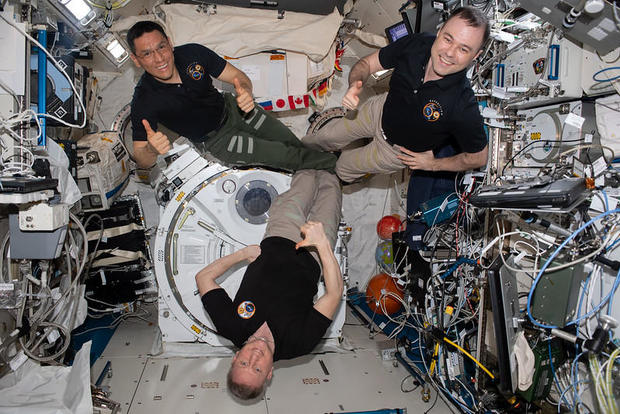
Hoburg said he was looking forward to a "real shower." Alneyadi said he couldn't wait to rejoin friends and family, along with enjoying "a real hot cup of coffee." As for Fedyaev, "I think my dream is a bed for good sleeping. I can lay on one side. Another side. My back. Sleeping!"After initial medical checks aboard the recovery ship, all four fliers will be flown to shore by helicopter. A NASA jet then will carry them back to Houston and the Johnson Space Center for debriefing and reunions with friends and family.Left behind in orbit were three Soyuz crew members -- station commander Sergey Prokopyev, Dmitri Petelin and NASA astronaut Frank Rubio -- and four Crew Dragon fliers launched August 26 to replace Bowen and company: Crew-7 commander Jasmin Moghbeli, European Space Agency astronaut Andreas Mogensen, Japanese astronaut Satoshi Furukawa and cosmonaut Konstantin Borisov.NASA astronaut Frank Rubio, upper left, Soyuz commander Sergey Prokopyev, upper right, and flight engineer Dmitri Petelin will close out an extended yearlong mission when they return to Earth on September 27. Rubio will set a new record for the longest single flight by an American astronaut. NASA Prokopyev, Petelin and Rubio were launched to the station last September and are wrapping up a marathon 371-day mission.They originally planned to spend six months in space, but their Soyuz ferry ship was disabled by a major coolant leak last December. The Russians opted to send up a replacement spacecraft, and the crew's mission was extended an additional six months.A fresh Soyuz crew — commander Oleg Kononenko, Nikolai Chub and NASA astronaut Loral O'Hara — is scheduled for launch from the Baikonur Cosmodrome in Kazakhstan on Sept.15.Prokopyev, Petelin and Rubio will undock and return to Earth 12 days later. In so doing, Rubio will set a new U.S. record for the longest single spaceflight by an American astronaut.
Launched atop a SpaceX Falcon 9 rocket on March 2, the Crew-6 fliers will have spent 185 days and 22 hours off planet, circling the globe 2,976 times while traveling 78.9 million miles through space. At splashdown, Bowen, the only space veteran on the crew, will have logged 227 days in space across four missions.Over the course of their mission, the Crew-6 astronauts welcomed seven visiting vehicles, including two unpiloted Cargo Dragon spacecraft, two Russian Progress supply ships, a Northrop Grumman Cygnus cargo carrier and two piloted Crew Dragons.They also carried out three spacewalks. Bowen and Hoburg ventured outside twice to install new roll-out solar blankets and Alneyadi joined Bowen for a third excursion to retrieve a failed antenna package and to carry out other maintenance."It's certainly been the experience of a lifetime, and a real honor to get to spend six months, six incredibly short-feeling months, living and working aboard this incredible orbiting outpost," Hoburg said before departing the station. "I think we got a lot done."
Bill Harwood has been covering the U.S. space program full-time since 1984, first as Cape Canaveral bureau chief for United Press International and now as a consultant for CBS News. He covered 129 space shuttle missions, every interplanetary flight since Voyager 2's flyby of Neptune and scores of commercial and military launches. Based at the Kennedy Space Center in Florida, Harwood is a devoted amateur astronomer and co-author of "Comm Check: The Final Flight of Shuttle Columbia."